LUNG CANCER HARB ORING HER2 MUTATION :EPIDE MIOLOGI CAL CHARACTE RISTICS AND
( y* I& u# J0 e, x4 bTHERAPE UTIC PERSPECTIVES! A- ~# B; b8 @' F
J. Mazieres, S. Peters
/ V' F( N1 t. T- ^9 ~2 {1 M, {Introduction: HER2 oncogene is a memb er of the EGFR family, encoding atransmembrane receptor that drives and regulates cell proliferation. HER2 mutations are identified in about 2% of non small cell lung cancer (NSCLC) , mainly located in exon 20, and appear to be critical for lung cancer carcinogenesis . Very scarce data are available to define a clinical profile of the patients harboring HER2 mutated NSCLC. We aimed to study clinic opatholog ical characteristics an d therapeutic, x7 E8 E! y4 N6 h% V6 s
outcomes of patients harboring HER2 mutation in a large European series. Result s:We retrospec tively ide ntified 46 NSCLC patients diagn osed with HER2 exon 20 mut ation. HER2 mutation was mainly exclusive as only one concomitan t KRas mutation was des cribed. Our population was characterized by a median age of 60 yr (31 to 86 yr), a high proportion of women (30 vs. 16 men, 65% ), and of never smokers (24, 52%). All tumors were adenoc arcinomas (two with lepidic features). Half of the patients had stage IV dise ase at the time of diagnosis. HER2 targeted
$ |5 R4 t8 r' J- S1 I# \: _treatment was delivered after convention al chemothe rapy. A total of 20 anti-Her2- ]7 _7 C1 Q% [: V& ^
treatments were eval uable. We observed 4 progressive dise ases, 7 disease stabilizations' j, c2 g* f& n& P. s
and 9 partial resp onses according to RECIST 1.1 (overall response rate ORR = 45% ;& Q; e$ D- S& O' ^7 P9 a2 x3 P+ b
disease control rate DCR = 80%). Specifica lly, we obse rved a DCR of 92% for
2 D6 d; U: q" U0 Qtrastuzum ab-based therapie s (n = 14), 100 % for afatinib (n = 3) but no response to m( b; H$ d* x3 L
lapatinib (n = 2) and to a multiTKI (n = 1). Median survival was of 68.2 months and
( M1 A* E- w% k0 Z" \22.9 months for respectively early stage and stag e IV patients./ D' Y; ^0 v4 U! t
Conclusion: This study, the largest to date dedic ated to HER2 mutated NSCLC,0 G8 V1 y) \/ e6 i3 r$ D
reinforces the importance of an HER2 screening strategy in lung adenoc arcinomas .
1 f6 Q. P4 U+ G4 f4 y2 I9 v6 tHER2-target ed drugs shou ld be tested further, ide ally withi n large collaborative
6 M( r v# Y6 A1 nclinicaltrials.6 D6 q0 X$ t5 V6 u4 e- q
|
 多彩人生丨肺癌晚期治疗近3年转移灶
讲述者:健健康康整理者:pear
2023年,当母亲被确诊为肺癌晚期时,我感觉脚下的整个
多彩人生丨肺癌晚期治疗近3年转移灶
讲述者:健健康康整理者:pear
2023年,当母亲被确诊为肺癌晚期时,我感觉脚下的整个
 二十三个月跋涉:在生命的悬崖边,为
二十三个月。
放在漫长的人生里,不过是弹指一挥间。但对我而言,这几百个日夜,却是
二十三个月跋涉:在生命的悬崖边,为
二十三个月。
放在漫长的人生里,不过是弹指一挥间。但对我而言,这几百个日夜,却是
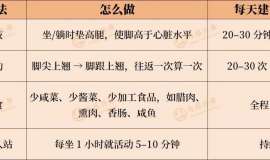
 “肿”么办?超详细【水肿】处理大全
作者:seacat很多正在接受 MET 靶向治疗的患者都会遇到一个常见“烦恼”:“脚为什么
“肿”么办?超详细【水肿】处理大全
作者:seacat很多正在接受 MET 靶向治疗的患者都会遇到一个常见“烦恼”:“脚为什么
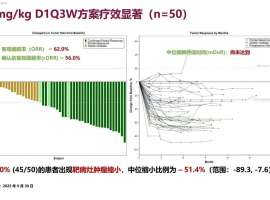 ESMO Asia公布关键数据:90%肿瘤缩小
作者:seacat对于HER2突变肺癌患者,“ADC药物有效但可能伤肺”是临床中最常被提及的
ESMO Asia公布关键数据:90%肿瘤缩小
作者:seacat对于HER2突变肺癌患者,“ADC药物有效但可能伤肺”是临床中最常被提及的
 权威开讲!仲佳教授详解小细胞肺癌治
作者:雨过天晴在肺癌家族中,小细胞肺癌虽仅占15%-20%的比例,却以“恶性程度高、进
权威开讲!仲佳教授详解小细胞肺癌治
作者:雨过天晴在肺癌家族中,小细胞肺癌虽仅占15%-20%的比例,却以“恶性程度高、进





 显身卡
显身卡